
Skip to content
  • ABCEL for Veterans
ABCEL – Enriching Life

ABCEL – Enriching Life

  • Home
  • About Us
  • Enriching Lives
  • Focus Groups
  • Enrichpedia
  • Connect

Category: Life on deployment or at base

Stories showcasing daily life, routines, challenges, and experiences while deployed or stationed at a base.

Breaking Barriers, Defending Skies

Breaking Barriers, Defending Skies

By Flying Officer Nitu Thapliyal (Retd)

In 1996, I had the honor of being part of a historic milestone—the first batch of women officers inducted into the operational branch of the Indian Air Force as Fighter Controllers and Air Traffic Controllers. Selected as a Fighter Controller, I stepped into a role that had, until then, been the sole domain of men. It was both a privilege and a responsibility—to be among the first women directly contributing to India’s air defence operations.

Our journey began with intense physical conditioning and demanding academic training at the Air Force Administrative College, Coimbatore. On 24th May 1996, we were commissioned into the Indian Air Force—a moment etched forever in my memory.

After commissioning, we moved to the Air Defence College, Memaura, for six months of professional training. We immersed ourselves in radar intercepts, mission planning, and live practice missions with fighter aircraft. This was followed by deployment to forward radar stations for real-time training.

My first posting was Amritsar. Winters were harsh, and our day began before sunrise, walking through freezing fog to the operations room. Inside, we tracked aircraft, planned interceptions, and coordinated missions. Despite the rigour, camaraderie made those days unforgettable—coffee sessions, laughter, and games after duty. Seniors were strict on the job but mentors off-duty, teaching us not just operational excellence but how to live with honour in uniform.

After training, I was posted to Delhi, entrusted with air defence responsibilities during Republic Day and Independence Day flypasts—securing the skies over the capital. While the country slept peacefully, we sat alert at radar consoles, monitoring every movement in the sky.

One light-hearted memory stands out: during a foggy night round, a sentry challenged me with the standard call—“Thum kaun aata hai!” Mid-sentence, realizing I was a woman officer, he corrected himself: “Kaun aati hai!” His flustered sincerity still makes me smile—a small reminder of the change we were part of.

Life had its surprises too. During a Commanders’ Conference, I met a young pilot who memorized my phone number at first sight. His honesty and charm led to a beautiful journey—one that began in the Air Force and continues to this day.

My second posting was Jammu—a front-row seat to history. On 3rd May 1999, the first signs of intrusion in Kargil emerged. My husband flew Mi-17 sorties while I monitored hostile UAVs and facilitated safe passage for IAF missions.

During the IC-814 hijacking, I tracked the aircraft in real-time and relayed updates to the Prime Minister’s Office. Later, during Operation Parakram, I continued radar duties through my second trimester of pregnancy, often in specially tailored overalls.

On 10th June 2002, Operation Parakram stood down. On 11th June, I gave birth to my son, Vedansh. His hospital tag read:
“Son of Flying Officer Nitu Thapliyal.”
That phrase meant everything—it proved motherhood and national service can coexist with strength and dignity.

I served actively for 11 years, participating in large-scale air defence exercises and emergency operations. At the time, women were not eligible for permanent commission. Despite this, our pioneering batch proved that women could perform under pressure and make split-second decisions in operationally critical roles.

Our success reopened women’s entry into Fighter Controller and ATC streams in 2000 and paved the way for permanent commission in 2010.

Reflection
From warzones to emergency hijack responses, from balancing motherhood with duty to breaking gender stereotypes—I have held one thing sacred: my commitment to the Tricolour.

ABCEL Perspective
Nitu’s story is a testament to courage and transformation. She stood at the threshold of change, proving that gender is no barrier to operational excellence. Her journey reminds us that leadership is not about titles—it’s about breaking barriers and inspiring generations.


Disclaimer:
Edited for clarity and storytelling with contributor permission. ABCEL has not verified this story for accuracy.
Read full disclaimer – Terms and Conditions.

Between Fire and Frost: The HAHO Combat Freefall Jump

Between Fire and Frost: The HAHO Combat Freefall Jump

By Brigadier Animish Ranade  (Retd)

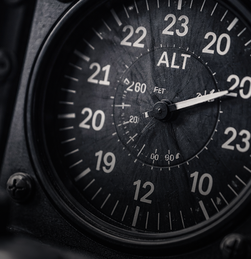
In May 1994, Agra simmered at 42°C as we prepared for our penultimate jump in the Combat Freefall Course — the High Altitude High Opening (HAHO) dive from 23,000 feet. Fifty jumps had brought us here, and only two remained before we could wear the coveted Combat Freefall Badge. This one was special: the highest fall, the longest glide, and the most extreme temperature swing we’d ever endure. 

We were dressed for the sky, not the sun — layered in thermal gear beneath our jump suits, helmets strapped, oxygen masks ready, and combat rucksacks weighing down our legs. The aircraft ramp closed behind us, and we “penguin-walked” into position, awkward and overloaded. As the Antonov-32 climbed, we began pre-breathing 99% oxygen to flush out nitrogen and prevent decompression sickness. The cabin temperature dropped rapidly. From 41°C on the ground to -30°C at altitude — a 71-degree plunge. Leather gloves, oxygen checks, mental rehearsals of 20 emergency scenarios — all part of the ritual. 

At 23,000 feet, the cabin depressurized. We switched to portable oxygen cylinders and stood up, limbs stiff, minds alert. The green light blinked. One by one, we dove into the void. Five seconds of freefall, then the chutes opened — a row of blue canopies fluttering at 22,000 feet, gliding over Fatehpur Sikri toward the drop zone 25 km away. 

The descent was long and silent. Forty minutes of steering through shifting winds, scanning compasses, wiping condensation from goggles, and soaking in the Gangetic plains below. At 10,000 feet, I removed my mask — the air was breathable again. The warmth returned gradually, then fiercely. By the time we landed, sweat poured from every pore. In 90 minutes, we’d traversed a temperature differential of 113°C. 

But the jump was only the beginning. HAHO is not a spectacle — it’s an insertion method for missions deep in hostile territory. The physical and mental toll is immense. Yet every soldier who completes it knows: this is what readiness feels like. 

Reflection

A HAHO jump is a masterclass in extremes — shifting from blistering heat to freezing cold, from stillness to rapid action, from preparation to execution. In corporate life, leaders face similar transitions: moving between strategy and crisis, long-term vision and immediate firefighting, comfort zones and uncertainty. The ability to stay composed, adapt quickly, and maintain clarity under pressure is what defines effective leadership. Just as skydivers rehearse for 20 possible emergencies before a jump, leaders must anticipate scenarios, prepare responses, and still act decisively when the unexpected arrives. Resilience is not about avoiding turbulence — it’s about navigating it with steadiness and purpose. 

ABCEL Perspective

This story captures the essence of operational resilience — the ability to endure discomfort, navigate uncertainty, and execute with precision. In leadership and transition, the same principles apply. Whether in boardrooms or battlefields, readiness is not just about preparation — it’s about presence, adaptability, and the quiet strength to move forward when the stakes are high. 


Disclaimer:
Edited for clarity and storytelling with contributor permission. ABCEL has not verified this story for accuracy.
Read full disclaimer – Terms and Conditions.

Recent Posts

  • Living Longer, Living Better
  • Between Work and What’s Next
  • Veterans Onboarding Playbook for HR and Managers
  • An Exploratory Study to Understand the Military-to-Civilian Transition Journey of Indian Armed Forces Veterans
  • Deck to Desk: A Playbook for Transitioning from the Indian Navy to Corporate Leadership

Recent Comments

No comments to show.

Archives

  • April 2026
  • March 2026
  • January 2026
  • July 2025
  • March 2024

Categories

  • Articles
  • Blogs
  • Playbooks
  • Publications
  • Reports
image/png
Aditya Birla Centre for Enriching Lives,
Aditya Birla Centre, S K Ahire Marg,
Worli, Mumbai -400030, India
Info.abcel@adityabirla.com
  • Home
  • About Us
  • Enriching Lives
  • Focus Groups
  • Enrichpedia
  • Connect
Follow us:

© 2024 Aditya Birla Group | All rights reserved.

Privacy Policy | Terms and Conditions | Sitemap

ABCEL – Enriching Life
Sign up

Unlock a World of Inspiration!

Sign up for exclusive access to uplifting stories, expert tips, and meaningful experiences that will empower you to live your best life.

Continue
×

Coming soon

Enter the 6-digit OTP sent to your email
×

A. Tool Design & Usability

B. Self-Reflection and Insight

C. Utility and Application

D. Overall Satisfaction

E. Suggestions (Optional)